Driving across Europe sounds simple until you cross your first border. Suddenly the toll system changes, your motorway vignette is no longer valid, a city requires an environmental permit, or you discover that the road you expected to be free uses automatic free-flow tolling.
That is what makes a European road trip exciting, but it can also make driving here surprisingly complicated.
.png "Traveling on the Italian Autostrade through the scenic Aosta Valley in northern Italy surrounded by Alpine mountains")
The good news is that you do not need to know every traffic rule in Europe before you leave. You just need to understand the things that can catch you out when travelling between countries.
This guide explains the most important things to know about driving in Europe in 2026, including tolls, vignettes, free-flow tolls, environmental zones, speed limits, documents, parking, mountain roads and the mistakes that can turn a great road trip into an expensive one.
Driving in Europe at a Glance
Why Driving in Europe Can Be Complicated
Europe may look small on a map, but driving rules are not the same everywhere.
You could start the morning on a French motorway, cross into Switzerland around lunchtime and finish the day in northern Italy. The borders may be almost invisible, but the rules are not.
European countries can have different:
- toll systems
- motorway vignettes
- speed limits
- parking regulations
- environmental zones
- winter-driving requirements
- road signs and traffic rules
And this is probably the most important thing to remember: an open border does not mean the driving rules stay the same.
What Documents Do You Need to Drive in Europe?
For most European road trips, the first thing to check is whether your documents are valid for every country on your route.
You should normally have:
- Driving licence
- Passport or national ID
- Vehicle registration documents
- Insurance documents
- Rental agreement, if applicable
If you are travelling with a non-EU driving licence, check whether an International Driving Permit is required before leaving home.
For rental cars, there is another important detail: check whether you are allowed to cross international borders with the vehicle.
Don't wait until you're standing at the rental desk.
Driving on the Right or Left in Europe
Most European countries drive on the right-hand side.
The main exceptions are:
- United Kingdom
- Ireland
- Cyprus
- Malta
If your road trip includes a change from right-hand to left-hand traffic, take extra care at roundabouts, junctions and motorway entrances.
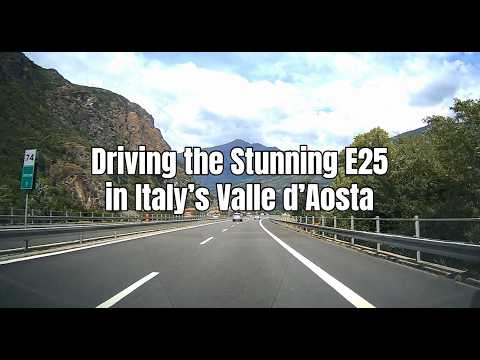
|
| Video of driving through Italy’s stunning Aosta Valley on the Autostrade, one of the most scenic Alpine road trip routes in Europe. |
Tolls in Europe: What You Need to Know
This is probably the part of European driving that causes visitors the most confusion. There is no single European toll system.
Some countries charge based on the distance you drive. Others use a vignette. Some have traditional toll booths, while newer systems use electronic detection without stopping.
A few examples:
Driving in France? Consider Bip&Go
If you drive through France regularly, an electronic toll tag can make motorway journeys considerably easier.
Instead of stopping at conventional toll booths, the tag is detected automatically at compatible lanes.
France is also using more free-flow tolling, where cameras and sensors detect your vehicle without a traditional barrier.
Read our complete guide to Bip&Go in France
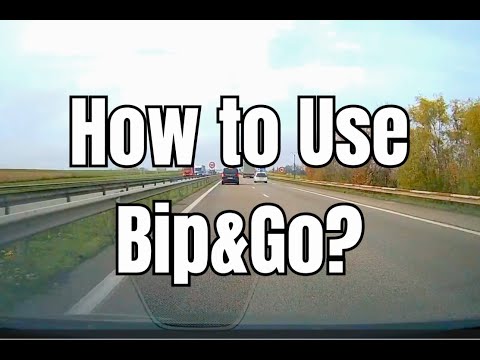
|
| Planning to drive in France? In this video, you can see how the Bip&Go toll badge works and why it makes driving on French motorways much easier. |
Free-Flow Tolls in France
Free-flow tolling is one of the newer things European road trippers need to understand.
Instead of stopping at a toll booth, you drive beneath a gantry. Cameras and sensors detect your vehicle and the toll is calculated automatically.
This can be convenient, but it can also catch foreign drivers by surprise because there is no barrier and no payment booth.
If you don't use an automatic payment system, you may have to arrange payment yourself within the required period.
And importantly, your Bip&Go tag can be used on compatible French free-flow toll sections, making this another useful feature for people driving through France.
How They Work & How to Pay
Motorway Vignettes in Europe
A vignette works differently from a normal toll. Instead of paying according to how far you drive, you pay for permission to use certain roads for a specific period.
This is particularly important in countries such as:
These countries use a vignette system rather than charging drivers for every kilometre of motorway travel. However, the rules are not identical. The validity period, price, roads covered and purchasing method can differ from one country to another.
Always check the official requirements before entering a motorway, especially if you are crossing several countries on the same road trip.
What Happens When You Cross a European Border?
This is one of the most interesting parts of European road trips. Imagine driving from France into Switzerland. There might be no traditional border checkpoint stopping you.
But several things can change:
- motorway charging
- speed limits
- road signs
- fuel prices
- parking rules
- road regulations
The same thing happens throughout Europe.
You can cross a border in a few seconds, but suddenly find yourself operating under a completely different set of road rules. That is why checking each country before you enter it is so important.
Speed Limits in Europe
Don't rely on one general European speed limit. Speed limits vary between countries and can also change depending on:
- the type of road
- weather conditions
- roadworks
- traffic
- local restrictions
- variable motorway signs
Pay particular attention to average-speed camera sections. And don't assume that crossing a border means the camera rules remain the same.
Traffic offences can also be pursued across borders, so a speeding ticket received abroad should not simply be ignored.
Low-Emission Zones: What Drivers Need to Know
For many road trippers, the motorway isn't the difficult part. Driving into the city is.
European cities increasingly use low-emission zones or other restricted-traffic areas.
Depending on the city, you may need:
- vehicle registration
- an environmental sticker
- an emissions classification
- a permit
- payment before entering
The important thing is that these rules are not identical from city to city. So don't rely solely on Google Maps or your sat-nav. Before driving into a European city, check the official local requirements.
Parking in European Cities
Parking is another easy way to get an unexpected fine. Don't assume that a parking space is legal just because your navigation app brought you there.
Check:
- whether parking is paid
- how long you can stay
- whether payment is required immediately
- whether the area is residents-only
- whether you need a parking disc
- whether the street is inside a restricted traffic zone
For many historic European cities, the easiest solution is to park outside the centre and continue by public transport or on foot.
Driving in the Alps: Tunnels, Mountain Roads & Weather
Some of Europe's best road trips are also among its most demanding.
Mountain roads can involve:
- steep gradients
- hairpin bends
- long tunnels
- changing weather
- seasonal closures
- snow and ice
Before a mountain journey, check the road conditions and weather forecast. Also check whether your route includes a toll tunnel.
Some major Alpine tunnels can save you hours of driving but have separate charges.

|
| Join me driving through the famous Mont Blanc Tunnel connecting Italy and France beneath the Alps. |
Renting a Car for a European Road Trip
Renting a car can make exploring Europe much easier, especially outside major cities.
Before booking, check:
Cross-border travel
Can you take the vehicle into every country on your itinerary?
Insurance
What is covered and what is the excess?
Tolls
Does the rental company provide a toll device, or are you responsible for payment?
Fuel policy
Does the car need to be returned full?
Automatic or manual
Automatic cars can be less available and more expensive in some destinations.
Vehicle size
A large SUV may sound comfortable until you're navigating a tiny Alpine village or historic Italian town.
The Most Common Mistakes When Driving in Europe
Most European road trips don't go wrong because of major problems.
It's usually the little things. Common mistakes include:
- Entering a motorway without buying the required vignette
- Missing a free-flow toll payment
- Assuming every country uses the same toll system
- Driving into a low-emission zone without checking
- Ignoring local parking signs
- Assuming speed limits are identical everywhere
- Forgetting about mountain weather
- Not checking rental-car border restrictions
- Assuming an open border means the rules haven't changed
The easiest way to avoid most of these problems? Check the rules whenever you cross into a new country.
A Simple European Road Trip Checklist
Before leaving home, check:
Planning a European Road Trip?
Driving is one of the best ways to explore the parts of Europe that trains don't reach.
Mountain villages, scenic passes, coastal roads and small towns can suddenly become part of your itinerary.
The trick is understanding what changes when you cross a border. Check the toll system, look for vignettes and free-flow sections, check city restrictions and keep an eye on local road rules.
Once you know those basics, driving across Europe becomes much easier, and you can spend less time worrying about the rules and more time enjoying the journey.