You hear Gullfoss before you fully take it in. The Hvítá River crashes down two enormous steps before disappearing into a deep canyon, sending mist into the air around the waterfall. Gullfoss is one of those Iceland sights that looks impressive in photographs, but its scale becomes much easier to appreciate when you are standing beside the rushing water.
Located along Iceland's famous Golden Circle, Gullfoss is one of the country's most spectacular and accessible waterfalls. It is also a place with an interesting conservation story, thanks to Sigríður Tómasdóttir and her efforts to protect the falls from hydroelectric development.
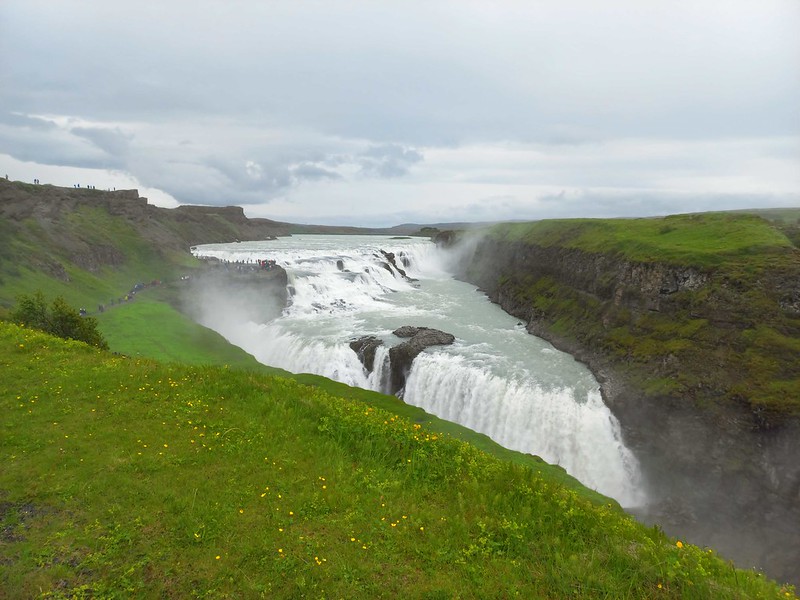 |
| Gullfoss Waterfall is one of Iceland's most spectacular sights along the Golden Circle. |
Gullfoss Waterfall at a Glance
What Makes Gullfoss So Special?
Gullfoss is not Iceland's tallest waterfall, but its setting and sheer power make it one of the country's most memorable.
The Hvítá River plunges down in two dramatic stages. The first drop is around 11 metres (36 feet), followed by a second drop of approximately 21 metres (69 feet), giving Gullfoss a total height of about 32 metres (105 feet).
What makes the waterfall particularly impressive is what happens next: the water disappears into a narrow, rugged canyon. From the viewpoints, it can almost look as though the river is simply vanishing into the earth.
During summer, the flow of the Hvítá River can be enormous, with average summer flow often quoted at around 140 cubic metres per second. When the sun appears, the spray can also produce spectacular rainbows above the falls.
What Is It Like to Visit Gullfoss?
One of the best things about Gullfoss is that you do not need a long hike to experience it.
From the visitor area, walking paths lead towards the waterfall and its viewpoints. As you get closer, the sound of the water becomes increasingly powerful and, depending on the weather and wind, you may feel spray from the falls.
This is a place where it is worth slowing down. Take photographs, walk between the viewpoints and spend a few minutes simply watching the river disappear into the canyon.
A waterproof jacket is useful even in summer. The spray, wind and rapidly changing Icelandic weather can make the area feel considerably cooler than expected.
The Best Views of Gullfoss
Upper Viewpoints
The higher viewpoints give you a better overview of Gullfoss and the surrounding landscape. From here, you can see how the river approaches the waterfall before cutting through the canyon.
Closer Viewpoints
The viewpoints closer to the falls are where the experience becomes much more dramatic. The roar of the water is louder, the spray is more noticeable and the scale of the waterfall becomes much easier to appreciate.
Photography at Gullfoss
Gullfoss is particularly photogenic when sunlight catches the spray and creates a rainbow. A wide-angle lens is useful for capturing the waterfall together with the canyon, while a longer lens can highlight the rushing water.
Always stay on the designated paths and behind barriers. Gullfoss is powerful and the surrounding rocks can be wet and slippery.
 |
| The powerful Hvítá River plunges into the dramatic canyon at Gullfoss. |
The Story of Sigríður Tómasdóttir
Gullfoss has a fascinating place in Iceland's environmental history.
In the early 20th century, plans were developed to harness the waterfall for hydroelectric power. Sigríður Tómasdóttir, the daughter of a local farmer, strongly opposed the plans and worked to protect Gullfoss.
She became closely associated with the campaign to preserve the waterfall and is now remembered as an important figure in Iceland's early conservation history.
The story has become an important part of Gullfoss itself. When you stand beside the waterfall today, it is easy to forget that this landscape could have looked very different if the hydroelectric plans had gone ahead.
Gullfoss and the Golden Circle
Gullfoss is one of the three classic stops on Iceland's Golden Circle, together with Þingvellir National Park and the Geysir geothermal area.
This makes it particularly easy to include in a day trip from Reykjavík. You can visit the three major attractions in one road trip without having to travel to a remote part of Iceland.
Gullfoss is also included in many organised Golden Circle tours, making it possible to visit without renting a car.
How Long Should You Spend at Gullfoss?
You can technically see Gullfoss quite quickly, but rushing through it would mean missing part of the experience.
Allow around 45 minutes to 1.5 hours for a comfortable visit. This gives you time to walk between the viewpoints, take photographs and enjoy the waterfall without having to hurry back to the car or tour bus.
If you are driving the Golden Circle independently, having some flexibility in your schedule is useful. Weather, crowds and photography stops can all change how long you want to stay.
Gullfoss in Summer
Summer is the easiest season for exploring the Golden Circle. The long daylight hours give you plenty of flexibility, while the surrounding landscape is generally more accessible.
The waterfall can also look particularly impressive with the green Icelandic landscape around it, and sunny weather can produce rainbows in the spray.
The main downside is that summer is also the busiest season. Gullfoss can become particularly busy around the middle of the day when Golden Circle tours arrive.
Gullfoss in Winter
Winter gives Gullfoss an entirely different appearance.
Snow and ice can cover the surrounding landscape while the Hvítá River continues to thunder through the canyon. The contrast between the white landscape and the dark rushing water can be spectacular.
However, winter conditions in Iceland can change quickly. Paths may become slippery and road conditions can deteriorate quickly, so always check the weather and road situation before setting off.
If you visit Gullfoss in winter, allow yourself extra time and wear proper footwear with good grip.
How to Get to Gullfoss
Gullfoss is located in southwest Iceland and is one of the easiest major waterfalls to visit from Reykjavík.
It is normally visited as part of a Golden Circle road trip, and many organised tours from Reykjavík also include Gullfoss in their itinerary.
If you are driving yourself, remember that the journey time can vary considerably depending on weather and road conditions. This is especially important in winter.
Visitor Facilities at Gullfoss
Gullfoss is well prepared for visitors, with facilities close to the waterfall.
The visitor area includes a café and restaurant, restrooms and a shop. This makes it a convenient place to take a break during a Golden Circle road trip.
The waterfall itself is free to visit, and the sightseeing area is accessible year-round. Keep in mind that the visitor facilities have their own opening hours.
Practical Information for Visiting Gullfoss
Why Gullfoss Deserves a Stop
Gullfoss is famous for a reason, but its appeal is not simply that it is one of Iceland's most photographed waterfalls.
It is the combination that makes the place memorable: the enormous volume of water, the two dramatic drops, the narrow canyon, the spray and the possibility of seeing a rainbow hanging above the falls.
Then there is the story behind it. The fact that Gullfoss was once threatened by plans for hydroelectric development makes the landscape feel even more significant today.
If you are travelling Iceland's Golden Circle, do not treat Gullfoss as just another quick photo stop. Give yourself some time to walk to the viewpoints and experience the sound and power of the waterfall.
Gullfoss is one of those Icelandic places where the landscape does most of the talking.