Most travel guides describe Brussels like they’re introducing a respectable middle-aged diplomat.
They’ll tell you about the architecture. The museums. The history. The importance of the European Union. And yes, technically all of that is true. But Brussels refuses to act like a normal capital city.
Brussels is weird. It’s a city where a tiny statue of a peeing child became a national icon. A city where people passionately debate mayonnaise quality like it’s geopolitics. A city that smells permanently of chocolate, warm waffles, beer foam, and fries.
One minute you’re standing in one of the most beautiful squares in Europe surrounded by golden guild houses and Gothic towers. Ten minutes later you’re eating fries out of a paper cone while a man dressed as Tintin cycles past a bar serving beer brewed by monks.
.jpg "Brussels Is Weird, Beautiful, and Completely Unforgettable") |
| The breathtaking heart of Brussels, where ornate guildhalls and centuries of history wrap around a square that feels almost unreal. |
This is not your standard travel guide. This is Brussels the way it actually feels.
If you come for the history, the food, the beer, the architecture, or simply the atmosphere, Brussels offers an experience unlike anywhere else in Europe. From the legendary Grand Place to the quirky Manneken Pis, from rich Belgian pralines to crispy golden fries, from hidden galleries to futuristic landmarks like the Atomium, Brussels effortlessly blends old-world charm with modern creativity.
Brussels in Reality: What the City Actually Feels Like
Before diving into attractions, there’s something important many travel guides forget to explain:
Brussels is not a perfectly polished city.
The weather is often grey. Graffiti appears beside historic buildings. One street can feel elegant while the next feels rough around the edges. French, Dutch, English, Arabic, and dozens of other languages blend together on trams and café terraces.
Brussels feels fragmented in a way many European capitals don’t. But that fragmentation creates personality.
This is not a city built for postcards alone. It’s a city people actually live in.
Students sit beside politicians. Artists drink beside office workers. Expensive chocolate boutiques exist directly next to tiny fry shops with handwritten menus. European Union officials walk past skateboarders and comic murals on their lunch break.
Grand Place: The Square That Casually Humiliates Other Cities
Every city claims to have a beautiful central square. Then Brussels enters the conversation like someone arriving overdressed to a casual dinner.
Surrounded by magnificent guild houses covered in gold detailing, towering Gothic architecture, and elegant historic buildings, the Grand Place feels almost unreal. It’s not just a square; it’s a masterpiece. Every building tells a story about Brussels’ wealthy trading history, craftsmanship, and artistic ambition.
At the center stands the impressive Town Hall, instantly recognizable by its soaring spire reaching into the sky. Built during the 15th century, the Town Hall remains one of the finest examples of Gothic architecture in Belgium. Across from it sits the King’s House, also known as the Maison du Roi or Broodhuis, another architectural gem dominating the square.
The beauty of the Grand Place changes throughout the day. Early in the morning, the square feels calm and magical, with soft sunlight illuminating the golden façades. During the afternoon, travelers from all over the world fill the square, cameras clicking as people admire the details carved into every building. In the evening, the atmosphere becomes even more enchanting when the buildings light up against the dark Belgian sky.
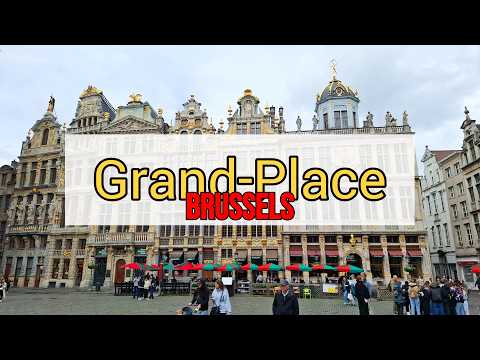 |
| Video showing the Grand Place in Brussels with surrounding historic buildings. Click to watch. |
But the best way to experience the Grand Place is not by rushing through it.
Find a terrace café, order a Belgian beer or a coffee, and simply sit for a while. Watch the movement of the city around you. Listen to the mixture of languages spoken by travelers and locals alike. Observe the tiny architectural details that many visitors completely miss.
The Grand Place is not just a tourist attraction, it’s the beating heart of Brussels.
Every two years in August, the square transforms into the famous Flower Carpet, a spectacular display made from hundreds of thousands of colorful begonias arranged into intricate patterns. It’s one of the most extraordinary events in Belgium and turns the square into a living artwork.
Even without the Flower Carpet, however, the Grand Place alone is worth visiting Brussels for.
The Best Neighborhoods in Brussels
One of the biggest mistakes travelers make is treating Brussels like a city you “finish” in one afternoon.
The real personality of Brussels lives inside its neighborhoods.
Sablon: Elegant Brussels
Sablon feels refined without becoming boring.
Chocolate boutiques, antique shops, quiet cafés, and beautiful architecture create one of the city’s most elegant areas.
This is where Brussels suddenly becomes sophisticated.
You’ll find famous chocolatiers, stylish locals drinking wine on terraces, and some of the prettiest streets in the city.
Marolles: Gritty, Local, Creative
Marolles feels completely different.
Vintage shops. Street art. Second-hand stores. Local bars. A slightly chaotic energy.
This neighborhood feels less polished and more lived-in.
The Place du Jeu de Balle flea market gives the area an old Brussels atmosphere that many visitors completely miss.
Ixelles: Cafés, Nightlife, International Energy
Ixelles has a younger, more international atmosphere.
Students, expats, artists, and locals all mix together here.
The café culture is excellent, nightlife is lively without feeling too touristy, and the streets around Flagey become especially energetic during warm evenings.
Saint-Gilles: Artsy and Underrated
Saint-Gilles feels creative and slightly hidden.
Art Nouveau houses, independent cafés, galleries, and multicultural food spots make it one of the most interesting areas in Brussels.
It’s the kind of neighborhood where you accidentally spend hours wandering.
European Quarter: Strange Political Surrealism
Then there’s the European Quarter.
Glass office buildings. Politicians everywhere. Multiple languages spoken simultaneously. People discussing international policy while eating sandwiches in parks.
It feels strangely detached from the rest of Brussels. And yet somehow it still belongs.
Get Lost in Brussels’ Hidden Streets
One of the greatest pleasures in Brussels is simply wandering.
Unlike cities built around wide boulevards and strict planning, Brussels feels wonderfully chaotic in the best possible way. Tiny streets twist unexpectedly. Narrow alleys suddenly open into beautiful hidden squares. Quiet corners reveal old cafés, bookstores, chocolate shops, or local bars filled with character.
Brussels rewards curiosity.
Some of the city’s most memorable moments happen when you stop following Google Maps and simply explore. Walk without a plan. Turn into the smaller streets. Let the smells guide you.
You might discover:
- A tiny vintage shop hidden behind ivy-covered walls.
- A local bakery selling warm Belgian waffles.
- A centuries-old pub serving Trappist beer.
- Street art decorating unexpected corners.
- Small comic book murals celebrating Belgium’s comic culture.
- Quiet courtyards where locals gather far from the tourist crowds.
Brussels has a personality unlike the polished perfection of some European capitals. It feels authentic, lived-in, and creative. There’s beauty in its imperfections.
Comic Book Culture: Brussels Is Basically a Giant Graphic Novel
Belgium takes comic books seriously. Very seriously.
Characters like Tintin, the Smurfs, Lucky Luke, and Spirou are not just cartoons here. They’re cultural icons.
One of the most unexpectedly fun places to experience this side of Brussels is the Comics Figurines Museum, filled with detailed statues, collectible figures, and nostalgic Belgian comic history. Even people who normally don’t care about comics usually end up staying far longer than expected.
And Brussels celebrates that identity everywhere.
Brussels has an entire Comic Strip Route, where giant murals are painted directly onto building walls. Some are tucked away in quiet side streets you’d never think to explore. Others suddenly appear above cafés, corner shops, or between two ordinary apartment blocks, as if the city is quietly interrupting itself with drawings.
You can follow the official trail using the Brussels Comic Strip Route map and guide, which helps you track down dozens of murals spread across different neighborhoods. It turns wandering the city into something closer to a treasure hunt than sightseeing.
The Legendary Manneken Pis
No visit to Brussels is complete without seeing the city’s most famous little resident: Manneken Pis.
At first glance, many visitors are surprised. “That’s it?”
The statue is indeed much smaller than people expect. But size has never been the point.
Manneken Pis represents the humor, independence, rebelliousness, and self-irony of Brussels itself. The tiny bronze boy urinating into a fountain has become one of the city’s greatest symbols.
Created in 1619 by sculptor Jérôme Duquesnoy, the statue survived wars, thefts, revolutions, and centuries of tourism. The original statue was eventually moved to the Brussels City Museum for protection, and the version standing there today has been a replica since 1965.
 |
| Brussels’ most iconic landmark, dressed in one of its many costumes. A tradition that keeps this tiny statue endlessly changing character. |
There are many legends explaining the statue’s origins.
One story claims a little boy extinguished a burning fuse with his urine, saving the city from disaster. Another says he was a lost child found relieving himself in a garden after an extensive search. Whether the stories are true hardly matters anymore.
The people of Brussels adopted Manneken Pis as a symbol of their spirit: playful, independent, and impossible to take too seriously.
One of the most unique traditions surrounding the statue is its enormous wardrobe. Manneken Pis owns more than 1,200 costumes. Yes, really.
Throughout the year, the statue is dressed in various outfits depending on celebrations, international events, holidays, or visiting dignitaries. He has worn everything from traditional Belgian clothing to astronaut suits, Elvis costumes, football uniforms, and national costumes from countries all over the world.
If you’re lucky, you may arrive while he’s dressed for a special occasion.
Nearby, you can even visit the GardeRobe MannekenPis museum, where many of these costumes are displayed.
The crowds around the statue are usually large, but the atmosphere remains cheerful and lighthearted. People laugh, take photos, and embrace the quirky tradition.
Jeanneke Pis: The Hidden Female Counterpart
Many travelers never discover Jeanneke Pis.
Hidden inside a small alley near Rue des Bouchers, this small bronze statue serves as the female counterpart to Manneken Pis.
Created in 1987, Jeanneke Pis depicts a little girl squatting and urinating into a fountain basin. Unlike the constant crowds around Manneken Pis, Jeanneke Pis often feels more hidden and intimate.
 |
| Tucked away in a narrow alley, this lesser-known counterpart to Manneken Pis adds a playful, unexpected twist to Brussels’ street art culture. |
Finding her is part of the experience. You walk through narrow restaurant-lined streets, pass glowing signs and busy terraces, and eventually arrive at a quieter little corner where Jeanneke sits.
Some people see the statue as odd or humorous, while others appreciate it as another example of Brussels’ playful and irreverent personality.
Brussels has never been a city afraid of humor.
That’s part of its charm.
Rue des Bouchers: Tourist Trap or Delicious Tradition?
On your way through central Brussels, you’ll likely pass Rue des Bouchers.
This narrow pedestrian street is famous for its many seafood restaurants, bright neon signs, outdoor menus, and lively atmosphere.
Some travelers dismiss it as a tourist trap. Others absolutely love it. The truth lies somewhere in between.
Rue des Bouchers is undeniably touristy. Restaurant staff often stand outside inviting visitors inside, menus are displayed everywhere, and prices can be higher than elsewhere in the city.
But despite this, the street remains part of the Brussels experience.
At night, the atmosphere becomes energetic and lively. Lights reflect on the narrow cobblestones while people gather for dinners filled with Belgian specialties.
One of the dishes most associated with Brussels is moules-frites, mussels served with Belgian fries. A giant steaming pot of fresh mussels accompanied by crispy golden fries and mayonnaise is one of Belgium’s classic comfort foods.
Traditional versions include:
- Moules marinières with white wine and herbs.
- Creamy garlic versions.
- Mussels cooked with Belgian beer.
- Spicy variations.
Combined with a cold Belgian beer, it becomes the perfect Brussels dinner.
Even if you choose not to eat on Rue des Bouchers itself, walking through the street is worth it simply for the atmosphere.
It represents the energetic, culinary side of Brussels.
Belgian Chocolate in Brussels: The City Smells Like Cocoa
There’s one thing nearly every visitor notices immediately in Brussels:
The smell.
Walk through the city center and you constantly catch the scent of chocolate drifting from open shop doors. Belgium is world famous for chocolate, and Brussels may be one of the best places on Earth to experience it.
Chocolate shops are everywhere. And not just one or two. Entire streets seem dipped in cocoa. Elegant boutiques with gold lettering, tiny family-run praline shops, luxury chocolatiers where the chocolates look more expensive than jewelry. Brussels doesn’t casually sell chocolate. Brussels seduces you with it.
The dangerous thing about Brussels is that you can never walk for more than thirty seconds without somebody offering you free chocolate.
At first, you politely accept one sample. Five minutes later you’ve entered four different shops and somehow purchased an amount of pralines normally reserved for national emergencies. And honestly? No regrets.
But here’s the thing nobody tells you: not every chocolate shop in Brussels is automatically amazing. Some places survive entirely on tourists panic-buying boxes with pictures of Manneken Pis on them. The real magic lies in the authentic Belgian chocolatiers.
And Belgians take chocolate seriously.
This is not supermarket candy culture. This is craftsmanship. Generations of chocolate makers obsessing over texture, fillings, cocoa percentages, glossy finishes, and praline shells so delicate they crack with military precision.
Names like Pierre Marcolini, Neuhaus, Leonidas, Mary, and Wittamer aren’t just shops here. They’re practically institutions.
And then there’s the praline itself.
The first filled chocolate praline was created in Brussels by Neuhaus in 1912, which means humanity peaked over a century ago and we’ve just been trying to emotionally recover ever since.
Belgian Fries: The National Treasure Served in a Paper Cone
Belgians become strangely emotional when discussing fries. And after tasting real Belgian frites in Brussels, you suddenly understand why.
First of all, let’s settle something: They are not French fries. Calling them French fries in Belgium feels like walking into the Vatican and complimenting Italian architecture. You may technically survive the interaction, but spiritually you have caused damage.
Belgian fries are thicker, crispier, and somehow dramatically better than what most countries attempt.
The secret lies in the double frying method. Once to cook them. Twice to transform them into edible perfection.
Outside: crispy golden shell.
Inside: fluffy potato heaven.
And Brussels sells them absolutely everywhere.
Tiny fry stands.
Street kiosks.
Corner shops glowing at midnight like sacred temples of grease.
Some of these places are so small you wonder how they produce food capable of changing your emotional state.
A few of the most iconic spots locals swear by include Maison Antoine near Place Jourdan, often considered the benchmark for classic Brussels fries; Frit Flagey in Ixelles, where queues are part of the ritual and nobody seems to mind; and Fritland right in the city center, serving fries in the middle of pure tourist chaos but still managing to feel essential.
And then there’s the mayonnaise. Belgians don’t “add a little mayo.” Belgians commit to mayo. They place an alarming amount on top of fries with the confidence of people who know they are culturally correct.
Fresh hot fries with Belgian mayonnaise eaten while standing outside in a Brussels street somehow become one of life’s genuinely perfect experiences.
Waffles: Brussels Smells Like Dessert at All Times
And then there’s the other smell Brussels is famous for: warm waffles fresh from the iron. You notice it suddenly while wandering through the city center: warm butter drifting through the streets, caramelized sugar hanging in the air, fresh batter hitting hot irons somewhere nearby.
It’s impossible to resist. Belgian waffles are not merely snacks here, they are basically street-level emotional manipulation, and Brussels knows exactly what it’s doing.
You can instantly recognize tourists in Brussels by three things: an oversized waffle, melted chocolate on their fingers, and a facial expression that suggests they’ve briefly discovered inner peace.
The city sells waffles everywhere, but somehow every single stand still manages to pull people in like a magnet. You tell yourself “maybe get one later,” and five minutes later you’re holding a waffle bigger than your face.
A few places have become legendary for this exact experience, including Maison Dandoy, famous for its elegant Brussels waffles and historic atmosphere; Le Funambule near Manneken Pis, where tourists line up constantly for overloaded waffles dripping with chocolate; and Waffle Factory, a more modern favorite perfect for grabbing a warm waffle while wandering through the city center.
Belgium has two major waffle personalities, and they honestly feel like two completely different moods.
The Brussels waffle is the elegant one: rectangular, light, crispy, and dangerously photogenic. This is the waffle buried under strawberries, whipped cream, powdered sugar, Nutella, melted chocolate, bananas, cookies, and enough toppings to require engineering approval.
It’s the kind of dessert that makes tourists stop in the middle of the street just to take pictures before eating it.
Then there’s the Liège waffle, the chaotic cousin that completely ignores elegance. Smaller, denser, sweeter, and caramelized, this waffle doesn’t care about looking refined. Pearl sugar melts directly into the dough creating sticky little explosions of caramelized sweetness that destroy all self-control instantly.
It’s messier, heavier, and somehow even more addictive.
Brussels Beer Culture: Controlled Chaos in Liquid Form
Belgium treats beer the way some countries treat fine art. With deep respect, long traditions and slightly intimidating expertise.
And Brussels might be the best place on Earth to discover how wonderfully insane Belgian beer culture really is. Because Belgian beer is not just “beer.”
It’s an entire universe.
Trappist beers brewed by monks.
Cherry beers.
Dark abbey ales.
Strong tripels.
Wild fermented lambics.
Beers stronger than some cocktails pretending to be harmless.
And every single one arrives in its own specific glass because apparently Belgium collectively decided normal behavior was not ambitious enough. Order the wrong beer in the wrong glass and somewhere in Belgium a brewer suddenly feels emotionally uncomfortable.
Beer bars in Brussels are incredible places.
Some feel medieval.
Others feel like old libraries.
Some are tiny candle-lit caves filled with locals discussing beer with terrifying levels of knowledge.
Then there’s Delirium Café, probably the only place on Earth where the beer menu feels longer than some novels.
You don’t simply “grab a beer” in Brussels.
You begin a journey. A dangerous, delicious journey.
Because Belgian beer has one important characteristic: it hides its alcohol like a professional criminal.
A beer tasting fruity and innocent may secretly contain enough alcohol to erase your ability to pronounce Flemish street names. And Brussels street names are already difficult sober.
The Atomium: Brussels Built a Giant Metal Molecule and Nobody Questions It
Most cities build statues of kings. Brussels built a giant atom. And honestly, that feels correct.
The Atomium looks like somebody in the 1950s asked:
“What will the future look like?”
and Brussels answered: “Probably shiny.”
Built for the 1958 World Expo, the Atomium represents an iron crystal enlarged 165 billion times, which sounds exactly like the kind of sentence people accepted enthusiastically during the space-age era.
Nine enormous steel spheres connected by futuristic tubes rise above the city like a retro science-fiction dream.
Inside, escalators and elevators move visitors through glowing tunnels connecting exhibitions and panoramic viewpoints.
At night the Atomium lights up against the sky looking like an alien structure politely trying to blend into Belgium. And somehow, despite being completely different from the medieval heart of Brussels, it still feels connected to the city’s personality.
Inside Galerie Saint-Hubert: Where Brussels Turns Elegant
After hours of waffles, fries, beer, and chaotic wandering, Brussels occasionally reminds you it can also behave with incredible elegance.
Galerie Saint-Hubert feels like stepping into another century. Beneath enormous glass ceilings and perfectly symmetrical arcades, everything suddenly becomes quieter, softer, more refined. Even your footsteps sound more expensive here.
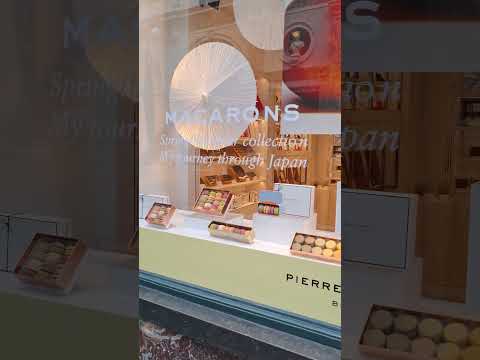 |
| Short with interior view of the Galerie Saint-Hubert in Brussels. Click to watch. |
Opened in 1847, it’s one of Europe’s oldest covered shopping arcades and still one of the most beautiful. Walking through Galerie Saint-Hubert feels like entering the expensive, beautifully lit version of Brussels.
Beneath the enormous glass roof, luxury chocolatiers display pralines like museum pieces while elegant cafés, bookstores, jewelry shops, and old boutiques quietly tempt everyone passing by.
If you want to buy genuinely excellent Belgian pralines, this is one of the best places in the city to do it. Names like Neuhaus, Pierre Marcolini, Mary, and Leonidas appear one after another, turning the entire gallery into a dangerous place for both your wallet and your self-control.
Why Brussels Stays With You
Brussels does not aggressively try to impress you the way Paris, Rome, or London sometimes do.
Instead, it slowly wins you over.
One waffle.
One beer.
One hidden alley.
One strange little statue at a time.
And eventually you realize the city has quietly attached itself to your memory through smells, atmosphere, tiny moments, and unexpected details.
Long after leaving Brussels, you still remember the sound of tram bells, the smell of melted chocolate drifting through wet streets, the glow of cafés beneath grey skies, and the strange feeling that this city never fully took itself seriously.
That’s what makes Brussels unforgettable.