Most people visit Rüdesheim am Rhein during the warmer months. The terraces fill with visitors, wine glasses clink in the narrow streets, and the famous Drosselgasse buzzes with activity from morning until late at night.
That wasn't the Rüdesheim we found.
 |
| Rüdesheim’s old town feels completely different during the quiet winter months. |
Our visit took place in February, long before the start of the main tourist season. The vineyards were bare, many businesses were still closed for the morning, and some of the town's most popular attractions were not operating at all.
Yet that unexpected timing allowed us to experience a different side of one of Germany's most famous Rhine towns.
Crossing the Rhine from Bingen
Before we even reached Rüdesheim, the journey already felt different from most day trips.
We were staying in Bingen am Rhein on the opposite bank of the river. From there, Rüdesheim looks deceptively close, just across the water, clearly visible, almost within walking distance if rivers worked that way.
But the Rhine doesn’t make it quite that simple.
There is no bridge here in the immediate area, and that small detail changes how the Rhine feels. It is not something you simply cross and forget, it becomes part of the journey itself.
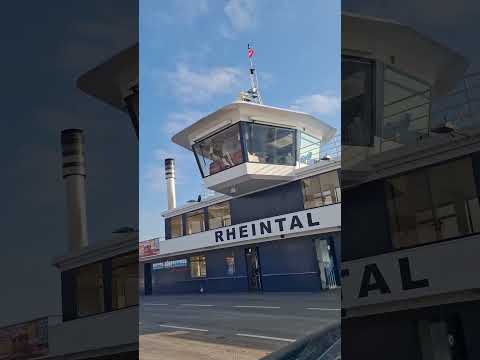 |
| Crossing the Rhine by ferry is one of the most atmospheric ways to reach Rüdesheim from Bingen. Click to watch. |
The ferry carries both cars and passengers, The crossing itself only takes a few minutes. You drive onto the ferry, stay in the car during the short trip, and continue driving once you reach the other side.
Even though the trip is short, it breaks the journey in a way that driving alone never would.
By the time we rolled off the ferry, we already felt like we had properly arrived.
First Impressions of Rüdesheim
Driving off the ferry, the first thing that struck me was how peaceful everything felt.
Rüdesheim is one of the most visited towns in the Rhine Valley, welcoming hundreds of thousands of visitors each year. Yet on this February morning, there was little sign of the crowds that usually define its image.
 |
| Most cafés were still closed when we arrived, giving the town a peaceful atmosphere. |
The streets felt calm. The riverfront was quiet. The town seemed to be waking up slowly.
Instead of rushing towards a specific attraction, we simply started walking. That turned out to be one of the best decisions of the day.
Exploring the Historic Centre
The centre of Rüdesheim is exactly what many visitors hope to find when travelling through this part of Germany.
Half-timbered houses lean slightly over narrow streets. Decorative facades, carved wooden details, and centuries-old buildings create an atmosphere that feels distinctly German without appearing overly staged.
 |
| Rüdesheim’s architecture reflects its long history of wine production and trade. |
What makes the town particularly interesting is that it developed around wine production and river trade. For centuries, the Rhine served as one of Europe's most important transport routes, helping communities like Rüdesheim prosper long before modern tourism arrived.
Walking through the centre today, traces of that history remain visible everywhere.
Many buildings date back hundreds of years, creating a townscape that feels remarkably preserved despite the popularity of the destination.
Drosselgasse Without the Crowds
No visit to Rüdesheim is complete without seeing Drosselgasse.
This narrow lane is arguably the town's most famous attraction. Stretching for just over 140 metres, it has become one of the best-known streets in Germany.
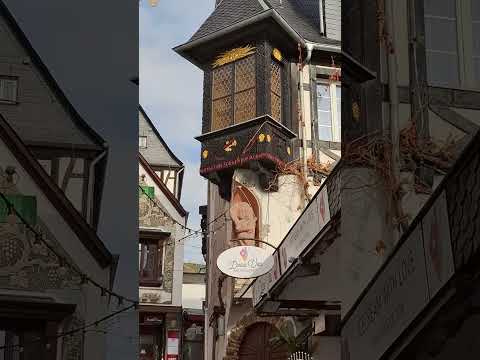 |
| One of Germany’s most famous streets, seen completely empty during the winter off-season. Click to watch. |
Most photographs show it packed with visitors. Restaurants spill onto the street. Live music drifts through the air.
People move shoulder to shoulder between wine taverns. That wasn't what we found. When we arrived, Drosselgasse was almost completely empty. The usual crowds hadn't arrived.
Drosselgasse is probably one of the few places in Germany where being there at the wrong time can actually improve the experience. Without the music, menus, and crowds, it became possible to notice the details that made the street famous in the first place.
Why Rüdesheim Became Famous
Although many people associate Rüdesheim with tourism today, its reputation is closely linked to wine.
The surrounding Rheingau region is one of Germany's most important wine-producing areas, particularly known for Riesling.
Vineyards cover the hills surrounding the town, benefiting from favourable growing conditions created by the Rhine and the local climate.
Wine production has shaped daily life here for centuries and remains a defining part of the local identity.
 |
| One of the remaining medieval structures in the centre of Rüdesheim. |
Even during our winter visit, when the vines were dormant and many wine-focused businesses were closed, it was impossible to ignore the connection between the town and the surrounding landscape.
The hills above Rüdesheim aren't simply scenery. They are working vineyards that helped build the town's reputation.
The Attractions We Couldn't Visit
One interesting aspect of travelling during the off-season is that not everything is available.
The famous cable car that normally carries visitors above the vineyards towards the Niederwald Monument wasn't operating during our visit.
Many visitors consider it one of the highlights of Rüdesheim.
The same was true for some restaurants, shops, and tourist attractions that only operate during the busier months.
At first, that might sound disappointing. In reality, it encouraged us to experience the town differently.
Instead of rushing between attractions, we spent more time wandering through the historic streets and observing details that might otherwise have gone unnoticed.
Sometimes travelling during the quieter months changes not only what you see, but how you see it.
Unusual Facts About Rüdesheim
While researching the town afterwards, I discovered several interesting facts that made me appreciate it even more.
Drosselgasse may be one of Germany's most famous streets, but it measures only around 144 metres in length.
The Niederwald Monument overlooking the town was completed in 1883 and commemorates the unification of Germany following the Franco-Prussian War.
Rüdesheim lies within the Upper Middle Rhine Valley, a UNESCO World Heritage Site recognised for its cultural landscape, castles, vineyards, and historic settlements.
Perhaps most surprisingly, the Rhine remains important enough here that ferries continue to play a vital role in connecting communities on opposite banks of the river.
In many parts of Europe, crossings like these have long since been replaced by bridges.
Here, they remain part of everyday life.
Is Rüdesheim Worth Visiting in Winter?
After spending only a few hours in town, I think the answer is yes.
Winter visitors need to approach Rüdesheim with different expectations.
 |
| Without crowds, the architecture of Rüdesheim becomes the main attraction. |
You won't find bustling terraces. Some attractions may be closed. The atmosphere is far quieter than the images used in tourism brochures.
But there are advantages too.
The streets feel more authentic. Photography becomes easier. You can appreciate the architecture without constantly navigating crowds.
Most importantly, you get to experience a town that often disappears behind its own popularity during the busiest months.
Why Rüdesheim Stayed With Us
In many ways, we missed some of the experiences that appear in almost every guidebook. Yet Rüdesheim still left an impression.
Perhaps it was the ferry crossing. Perhaps it was seeing Drosselgasse almost completely empty.
Or perhaps it was simply the opportunity to experience one of Germany's most famous river towns during a moment when it felt unexpectedly quiet.
Many places are enjoyable because of what happens there. Rüdesheim reminded me that sometimes a destination can be equally memorable because of what isn't happening.
For a few hours in February, before the crowds returned and the tourist season began, we saw a different side of the town.
And looking back, that may have been the best time to visit after all.
Winter towns don’t feel empty… they feel like they’re waiting. Rüdesheim was exactly that.
ReplyDelete